Work / Twitch chat overlay editor
ChatSkins
A browser editor for game-style Twitch chat overlays. Pick a skin, change anything about it, then paste one link into OBS.
Open getchatskins.comHow it works
- Role
- Idea, direction and testing. The application code was written by OpenAI Codex agents.
- Status
- Live. Built for the Codex x TwitchCon Hackathon (2026).
- Platform
- Web. Works in OBS, Streamlabs and any app with browser sources.
- Stack
- HTML, CSS and JavaScript modules, Node, Twitch IRC and EventSub, OpenAI API
The problem
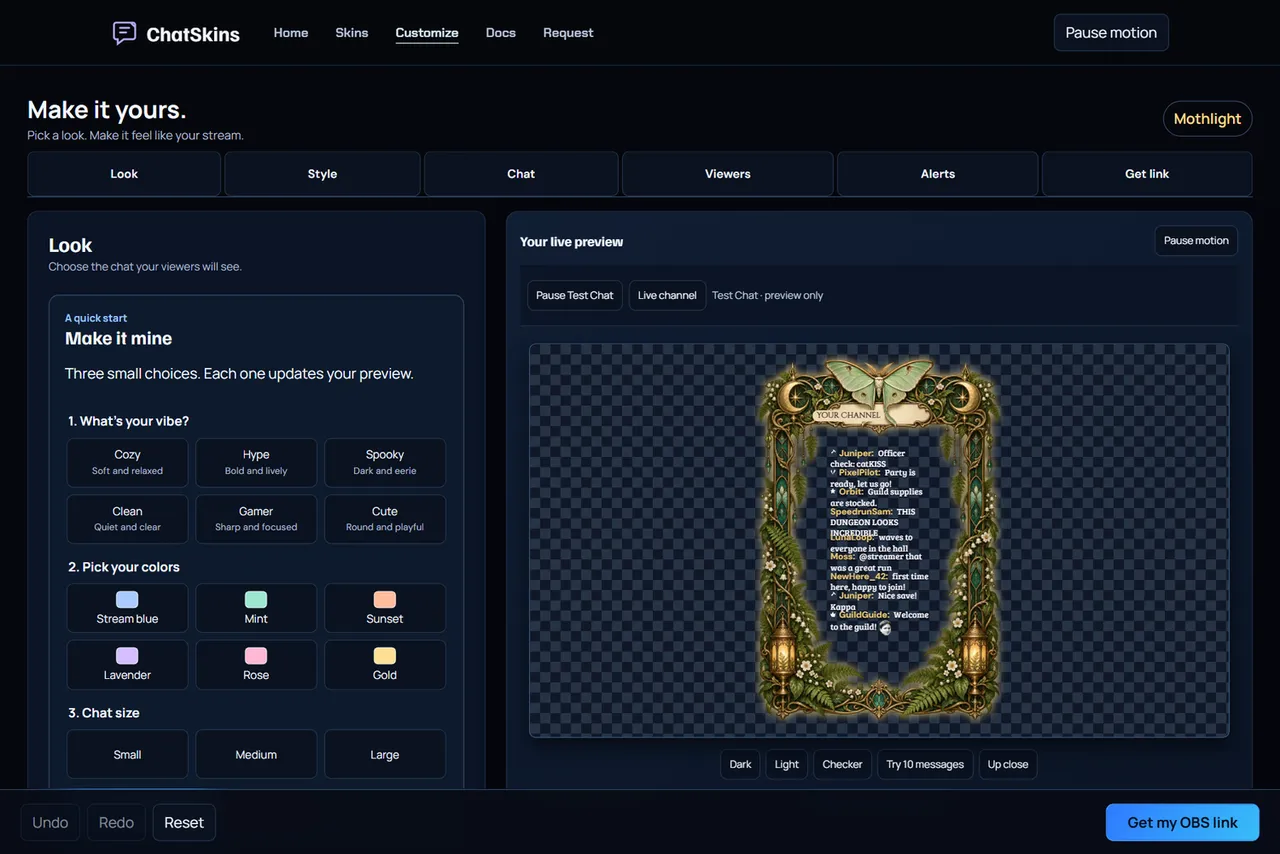
In-game chat has personality: a gold-trimmed guild window, a classic RPG dialog box, the blocky chat of a sandbox game. A stream overlay usually looks like everyone else’s.
ChatSkins set out to make Twitch chat feel like part of the game being played, and to make setup easy for streamers who do not write code: pick a look, make it yours, paste one link into OBS.
What I built
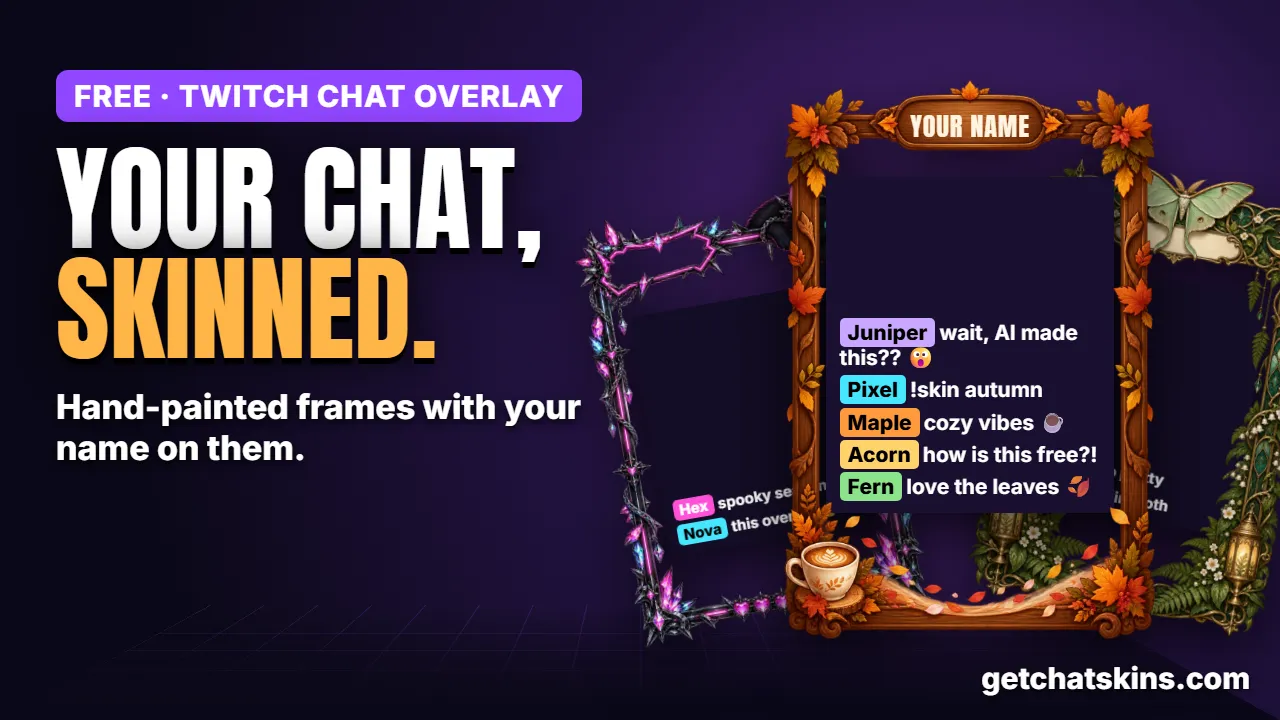
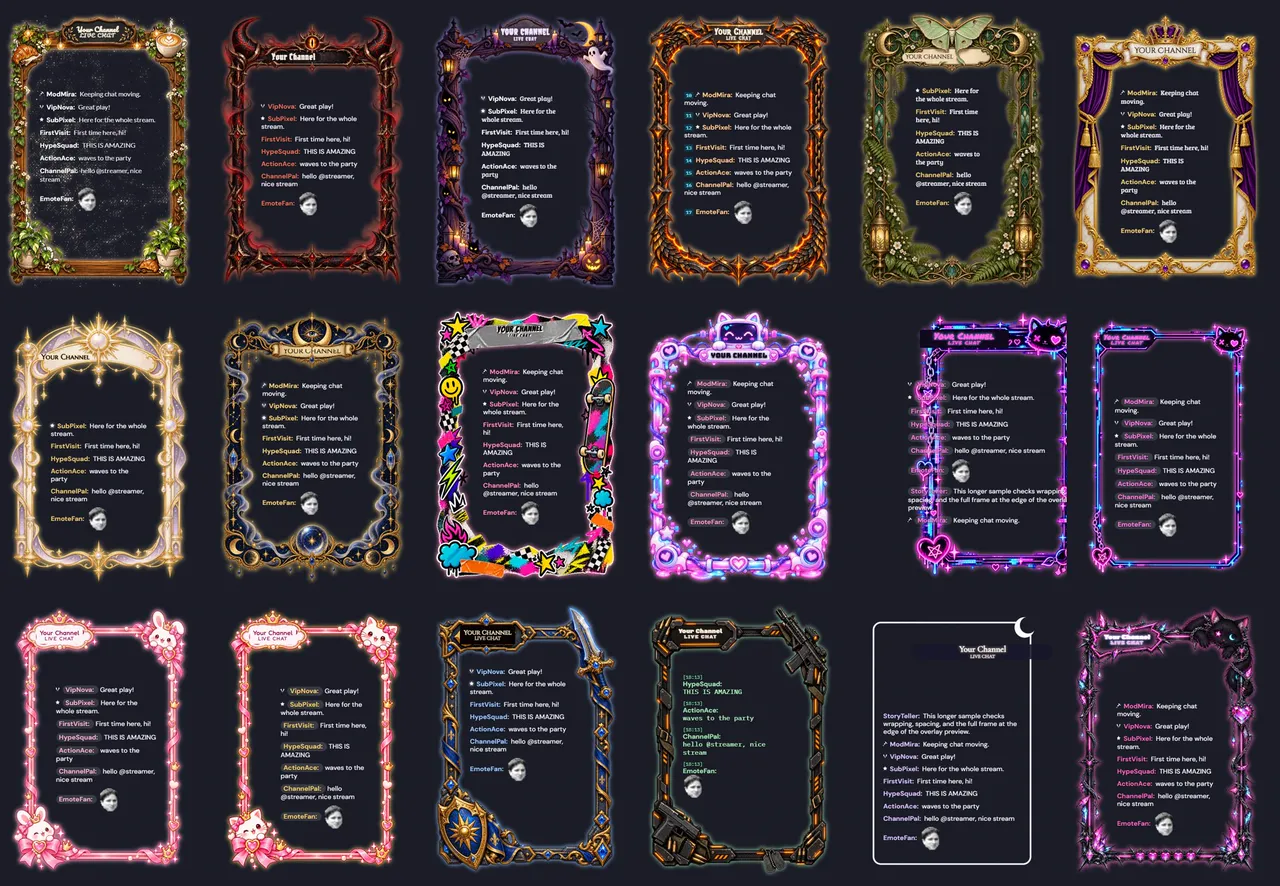
- 82 looks to start from. 24 game-inspired skins, 18 hand-painted frames, 12 illustrated skins, 12 animated skins and more.
- Frames with your name on them. The channel name sits on the frame’s plaque in a font that matches the art. Recolor the frame, add glow and set the background behind chat.
- Describe it, get it. Type what you want and a preview appears right away. About 15 seconds later a frame painted for that description arrives, with the name on the plaque and chat fitted inside.
- Ask ChatSkins. A built-in guide that knows every setting. It opens the right tab, walks through OBS, channel points and alerts, and can apply a style.
- Frame Studio and Place it. Build a frame from 60 parts, then drag, resize or snap chat anywhere on the stream.
- Chat viewers can play with.
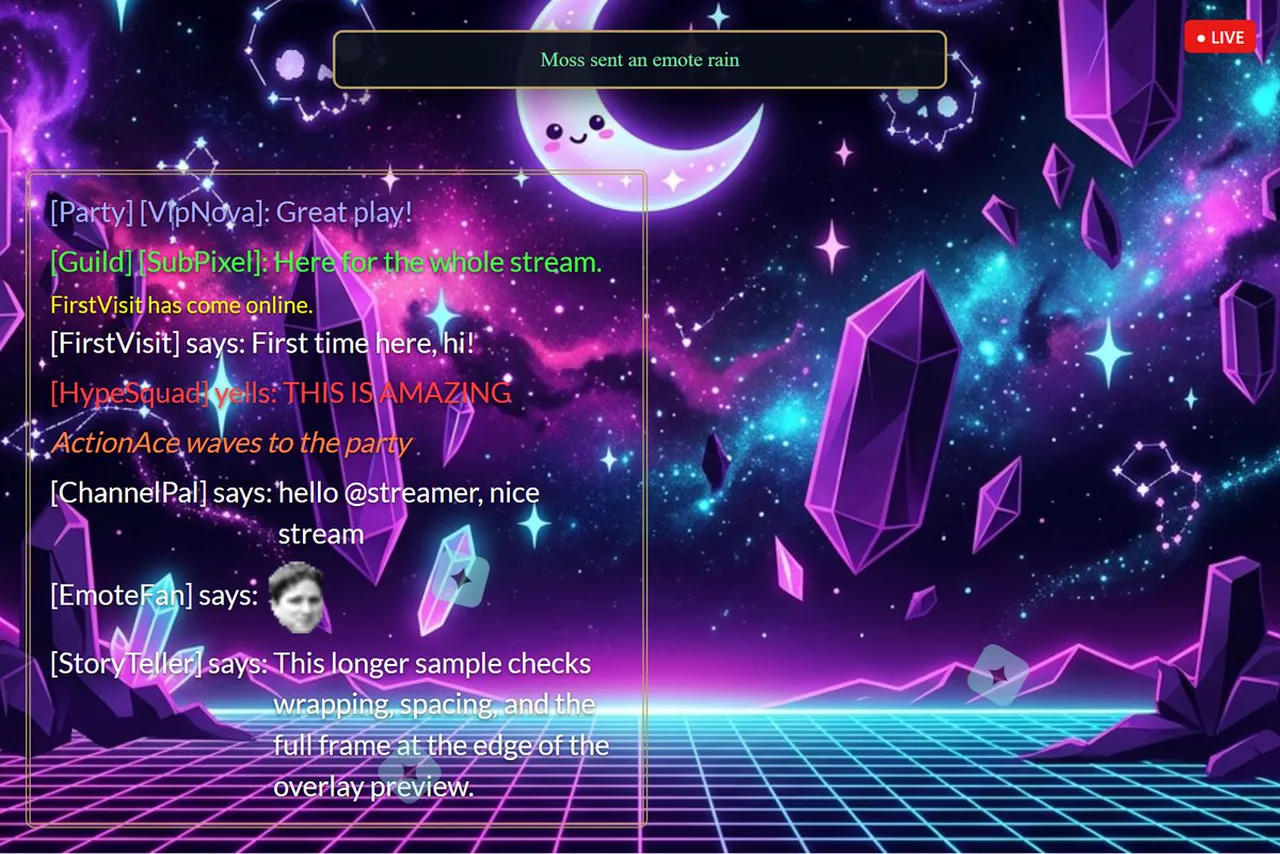
!skinswitches the overlay live,!skinvotestarts an on-screen vote, and channel point rewards trigger effects. One switch turns chat commands off. - Matching alerts and emotes. Follows, subs, gifted subs, cheers and raids styled to match the skin. Twitch, 7TV, BTTV and FFZ emotes.
No account and no install are needed. Twitch login is optional and only unlocks alerts and channel points.
How it works
There is no saved overlay on a server. The editor writes every choice into the link itself, and the overlay page rebuilds the look from that link each time OBS loads it.
Editor
Pick and tweakA skin from the catalog plus whatever the streamer changedLink
Settings in the URL fragmentOnly the difference from the catalog skin is stored, compressed. Older links keep working as options are addedOverlay page
OBS browser sourceDecodes the link, merges it with the catalog skin and sets up the frame, alerts and chat commandsTwitch
Chat over IRCRead only. The overlay never postsEventSubFollows, subs, cheers and raids for alertsEmotesTwitch, 7TV, BTTV and FFZScreen
DOM rendererBuilds names, badges, emotes and text, sizes the panel and keeps the messages that fit
A small Node service behind the site handles the AI features: the setup guide, the “describe your chat” helper and painted frames. The API key stays on the server, and there are daily usage limits.
How it was built
I came up with the idea and directed every round from Discord: what to build next, what looked wrong, what to cut. OpenAI Codex did the building, as a small team of agents with one job each. A designer agent turned ideas and bug reports into layouts, skin recipes and mockups. A builder agent wrote the app code and the tests. A lead agent turned my feedback into prompts, tested each build in a real browser and shipped it.
The loop never changed: design, build, test, measure, fix. Every task is one prompt file in the public repository, and all 40 Codex sessions are logged next to their prompts.
Frame art by Korivash and KittyVenom (made with ChatGPT image generation) and by OpenAI Codex image generation.
Hard problems and the decisions made
Fitting chat inside painted art
Problem Every painted frame has a different window. Placing chat by eye was always a little off, and messages overlapped the art or spilled out.
Decision Build a measuring tool that finds the largest empty area in each frame and the exact spot for the name plaque. Then handle the remaining causes one by one: late web fonts, rows rounding to whole pixels and preview scaling.
Result Messages fit at any text size.
Making generated frames usable
Problem The first generated frames were assembled from parts and did not look good. Painted images looked better but brought new problems.
Decision Check that the center of each painted image is see-through and repaint once if it is not. Measure the window and plaque automatically for every new image.
Result A typed description becomes a usable frame, with chat in the right place, in about 15 seconds.
Keeping the editor simple
Problem Every added feature made the menu harder to read.
Decision Redesign the options twice. The result is short tabs, a “Show all options” switch for power users and one-click setup for channel points.
Real Twitch, not test chat
Problem Channel points, alerts and chat commands had to work on a live channel.
Decision Test with a real moderator bot in a real chat, and render the full skin catalog through the real overlay to measure it.
Frames that vanished for some visitors
Problem The server was missing a MIME type for one image format, and the CDN cached the “not found” response.
Decision Add a version tag to every asset URL.
Result A bad response can no longer outlive the deploy that caused it.
Guard rails for the guide
Problem A built-in assistant must not leak anything or be free to run all day.
Decision The guide may not reveal keys, tokens, logs or code. Painting has daily limits, and a design reaches the public gallery only after review.
The stack, and what each part is for
- HTML, CSS, JavaScript modules
- The site, editor and overlay. No framework and no build step.
- URL fragment
- Holds the whole overlay configuration, so basic use needs no account and no database.
- Twitch IRC and EventSub
- IRC reads chat. EventSub delivers the events behind alerts.
- Node
- One HTTP service for the AI endpoints, run with no npm install.
- OpenAI API
- A small, fast model for the guide and the describe helper, and image generation with a transparent background for painted frames.
- OpenAI Codex agents
- Wrote the application code. One agent designed, one built, and each task was a single written prompt.
- Tests
- More than 70 test files, run with Node’s built-in test runner.
Screens
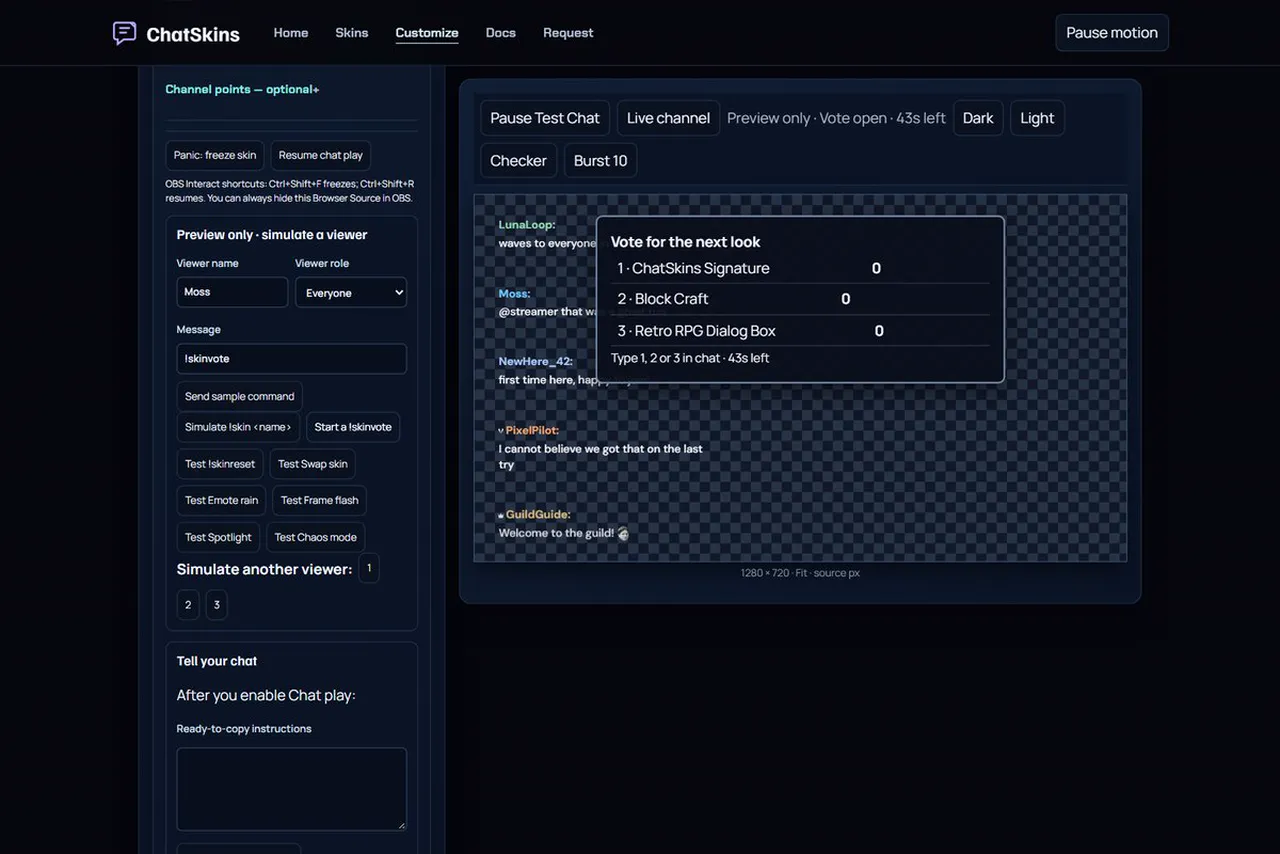
Timeline and what is next
- Oct 25, 2026First Codex session: the design brief
- Oct 25, 2026Editor, overlay and a survey of popular chat overlays, all in the first day
- Oct 26, 2026Session 40 of 40 logged
- NextMore frames and illustrated skins
- NextA public gallery of community-made designs
- NextMore guided setup for streamers who are not technical
Status and links
Live. Built for the Codex x TwitchCon Hackathon (2026).